
How to File for Divorce in Massachusetts: 7 Steps
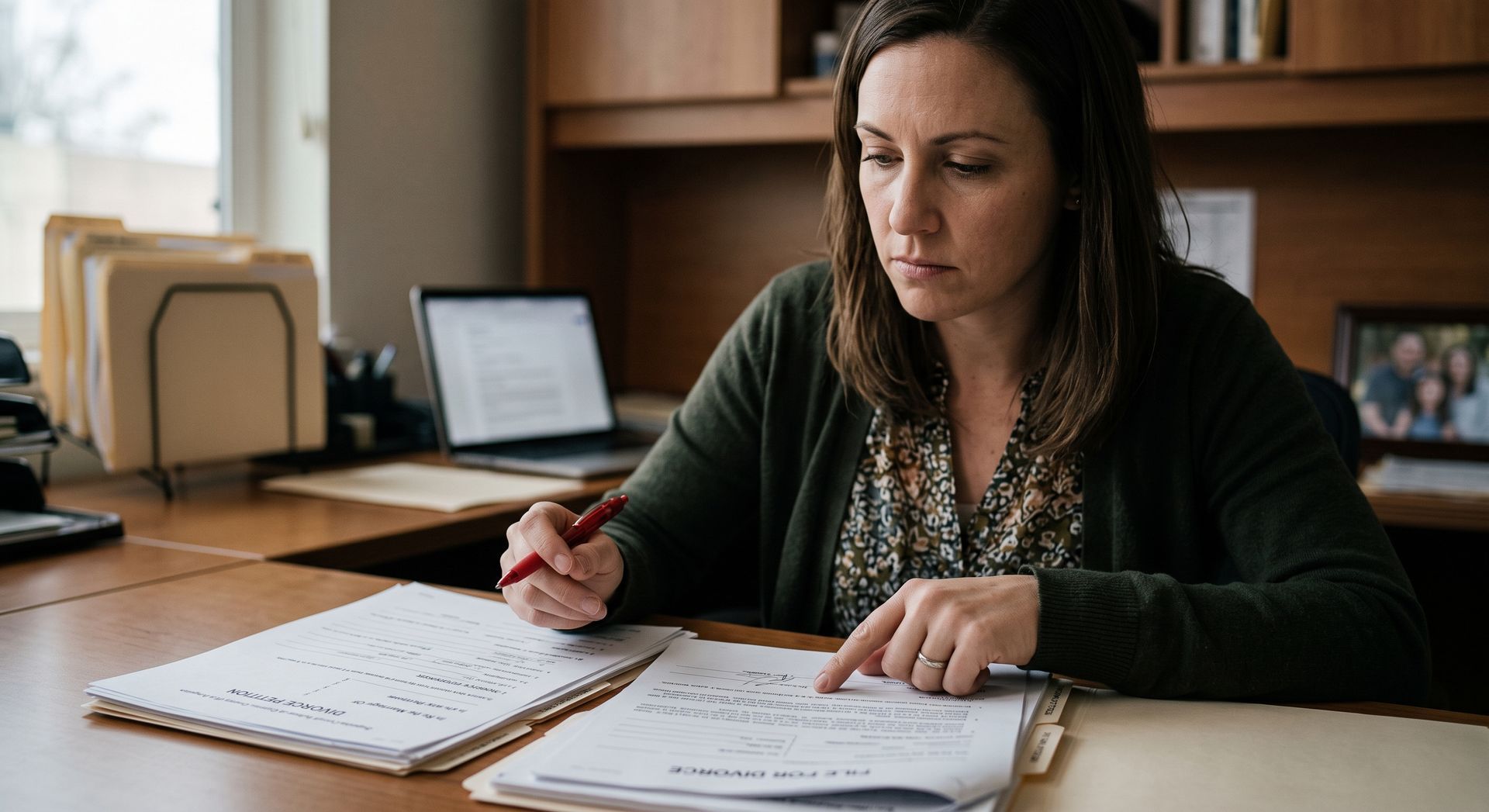
If you are learning how to file for divorce in Massachusetts, first determine whether your case is an uncontested 1A divorce or a contested 1B divorce. From there, you will prepare and file the required documents, complete service when necessary, resolve financial and parenting issues, and attend a court hearing.
Understanding the process before filing can help you avoid procedural problems and make informed decisions about property, support, and your children.
Before Filing: Is Your Divorce 1A or 1B?
Massachusetts allows no-fault divorce based on an irretrievable breakdown of the marriage. The appropriate filing route depends largely on whether the spouses have reached a complete agreement.
1A Uncontested Divorce
A 1A divorce applies when both spouses agree the marriage has irretrievably broken down and have a written agreement covering applicable issues such as property division, child custody, parenting time, child support, and alimony.
Both spouses jointly file, and their separation agreement must be notarized and ultimately reviewed by a judge.
1B Contested Divorce
A 1B divorce may apply when one spouse wants the divorce or when the spouses agree to divorce but have unresolved issues.
“Contested” does not necessarily mean going to trial. Spouses may reach an agreement after filing.
| 1A Divorce | 1B Divorce | |
|---|---|---|
| Filing | Joint | One spouse may file |
| Agreement | Complete agreement | Issues may remain |
| Service | Joint filing | Formal service required |
| Trial | Usually unnecessary | Possible if disputes remain |
7 Steps to File for Divorce in Massachusetts
1. Identify the Issues Your Divorce Must Resolve
Consider what must be decided before agreeing to terms. Depending on your circumstances, this may include custody, parenting time, child support, alimony, the marital home, retirement accounts, debts, and other assets.
The Law Office of Linda C. Holland provides Divorce Representation for contested and uncontested divorce matters in Salem and surrounding Massachusetts communities.
2. Gather the Required Divorce Documents
A 1A filing generally requires a Joint Petition for Divorce, certified marriage certificate, Report of Absolute Divorce, affidavit of irretrievable breakdown, and notarized separation agreement.
A 1B case begins with a Complaint for Divorce and supporting documents. Additional forms may be required when children, support, or other circumstances are involved.
Check current Probate and Family Court requirements before filing because forms and procedures can change.
3. Confirm Residency and the Correct Court
You generally may file for divorce in Massachusetts if you have lived in the state for one year or if the reason the marriage ended occurred here and you lived in Massachusetts as a couple.
The appropriate Probate and Family Court county depends on where you and your spouse lived together and where each spouse currently resides.
4. File Your Divorce Papers
Divorce paperwork and applicable fees are filed with the Probate and Family Court. Massachusetts currently permits 1A and 1B no-fault filings in person, by mail, or through eFileMA.
Filing begins the court process, but additional steps depend on whether the case proceeds under 1A or 1B.
5. Serve Your Spouse When Required
After a 1B complaint is filed, the court issues a summons. The complaint and summons must be formally served on the other spouse according to court procedures.
Proper service is important. Failure to complete it correctly can delay the case. A joint 1A filing follows a different process because both spouses participate in the petition.
6. Resolve Custody, Support, Property, and Other Disputes
Unresolved issues may require financial disclosures, discovery, negotiation, motions, court conferences, or hearings. Discovery can help identify income, accounts, debts, retirement assets, and other financial information relevant to the divorce.
Not every dispute must be decided at trial. When appropriate, spouses may use negotiation or Divorce Mediation & Settlements to work toward an agreement.
7. Attend the Hearing and Wait for Finalization
A judge must review the case before the divorce becomes final. In a 1A case, the judge considers whether the separation agreement adequately addresses the issues and is fair and reasonable. Unresolved 1B cases may require further hearings or trial.
A 1A divorce generally becomes final 120 days after judgment. A 1B divorce generally becomes final 90 days after judgment.
How Long Does It Take to File for Divorce in Massachusetts?
The timeline depends heavily on the filing type and whether disputes remain. A 1B hearing generally cannot occur sooner than six months after filing unless the court grants a waiver. A 1A case follows a different process, but it still includes a waiting period before the divorce becomes final.
Common Mistakes to Avoid When Filing for Divorce
Common problems can create delays or affect important rights. Before filing, watch for:
- Choosing the wrong divorce procedure
- Filing in the wrong county
- Submitting incomplete documents
- Failing to provide required financial information
- Agreeing to parenting or financial terms without considering long-term effects
- Failing to complete service properly in a 1B case
Careful preparation is especially important when significant assets, support obligations, or parenting disagreements are involved.
Frequently Asked Questions About Filing for Divorce in Massachusetts
Can I file for divorce if my spouse does not agree?
Yes. A spouse can file a 1B no-fault divorce based on irretrievable breakdown even without the other spouse’s agreement.
Do I need a lawyer to file for divorce in Massachusetts?
You may represent yourself. However, legal guidance can be valuable when custody, support, alimony, property, or disputed terms are involved.
How much does it cost to file for divorce in Massachusetts?
The Massachusetts Court System currently lists a $200 filing fee plus a $15 surcharge. A 1B case also has a $5 summons charge. Fee waivers may be available for qualifying individuals.
How long must I live in Massachusetts before filing?
Generally, you can file after living in Massachusetts for one year. Different rules may apply when the reason the marriage ended occurred in Massachusetts and the spouses lived here as a couple.
Need Divorce Guidance in Salem, MA?
If you are considering divorce in Salem or Essex County, contact The Law Office of Linda C. Holland to discuss your situation and next steps.
Recent Posts
Speak With a Trusted Divorce Attorney in Salem Today
If you are dealing with a divorce, custody dispute, or other family law matter, now is the time to get experienced legal guidance. The Law Office of Linda C. Holland is committed to helping clients in Salem, and throughout Essex, Middlesex, and Suffolk counties, move forward with confidence.
Call (978) 744-7808 today to speak directly with a divorce attorney in Salem, MA and schedule your consultation.